The Role of Lumber in Hurricane-Resistant Construction

To All Our Valued Customers, Over the past few years, the Covid 19 Pandemic has forced us to adapt and change the way we do things on a day-to-day basis. Florida Lumber is no exception. To make sure that we remain strong and competitive in the market for the years to come, Florida Lumber has had to adjust and change our vision for the future. In the last 2 years, we have stopped selling Sheetrock and drywall products, roofing felt and roofing materials, and have even closed on Saturdays.
Over the last few months, we have been transitioning our way out of the door supply business so on August 31, 2022, our door shop will stop assembling doors. We will continue liquidating our doors from inventory until we are out of material.
Some customers have asked if we are closing or even moving locations. To set the story straight, we are not closing or selling the business and we are not moving. These changes are all part of our new vision and path to continue serving South Florida and increasing our footprint in the construction supply industry.
Our focus is going to be on Lumber, Construction Materials, Rebar Fabrication and Rebar Accessories. As we have liquidated some of the items that we don’t sell anymore we have created more space to buy a larger volume of our core items and pass on the savings to our customers.
In the next year you will start seeing changes that will help improve our ability to serve you, our customers. We appreciate your business and your patience as Florida Lumber’s new vision becomes reality.
A Todos Nuestros Valiosos Clientes En los ultimos anos, la pandemia de el Virus (Covid 19) nos ha forzado a adaptarnos y cambiar la forma de hacer cosas en el dia a dia. Florida Lumber no ha sido una excepcion.
Para asegurarnos de mantenernos fuertes y competitivos en el mercado en los anos venideros, Florida Lumber ha tenido que ajustar y cambiar nuestra vision para el futuro. En los dos ultimos anos hemos dejado de vender los productos de yeso (sheetrock), paneles de yeso (drywall), tela asfaltica (roofing felt), materiales de techo y cerramos los Sabados. En los ultimos meses, hemos estado en transicion para salir del negocio de suministro de puertas, en Agosto 31, del 2022 nuestra tienda de puertas dejara de construir y/o cortar puertas. Vamos a continuar liquidando nuestro inventario de puertas haste que terminemos todo el material. Algunos de nuestros clientes han preguntado si estamos cerrando o si nos estamos moviendo a otra localidad. La verdad es que no estamos cerrando, no estamos vendiendo y no estamos cambiando de localidad. Estos cambios son todos parte de nuestra nueva vision y camino a continuar sirviendo al estado sur de la Florida y incrementar nuestras huellas en la industria de suministros de construccion.
paneles de yeso (drywall), tela asfaltica (roofing felt), materiales de techo y cerramos los Sabados.
En los ultimos meses, hemos estado en transicion para salir del negocio de suministro de puertas, en Agosto 31, del 2022 nuestra tienda de puertas dejara de construir y/o cortar puertas.
Vamos a continuar liquidando nuestro inventario de puertas haste que terminemos todo el material. Algunos de nuestros clientes han preguntado si estamos cerrando o si nos estamos moviendo a otra localidad.
La verdad es que no estamos cerrando, no estamos vendiendo y no estamos cambiando de localidad. Estos cambios son todos parte de nuestra nueva vision y camino a continuar sirviendo al estado sur de la Florida y incrementar nuestras huellas en la industria de suministros de construcción.
2431 N.W. 20TH ST.
MIAMI, FL 33142
PHONE: (305) 635-6412
Sales Fax: (305) 633-4054
Accounting Fax: (305) 635-3723
Email: [email protected]

The Role of Lumber in Hurricane-Resistant Construction
Florida's coast faces violent hurricanes, and the strength of your home depends on what sits behind the drywall. Lumber that holds hardware firmly and blocks moisture damage can determine whether your housing structure will survive or collapse.
After Hurricane Andrew destroyed thousands of homes in 1992, the state revised and strengthened its building codes to require treated framing and stronger roof-to-wall connections. When building crews choose approved materials for hurricane-proof construction, they're raising homes that stay intact through wind uplift, debris and rapid pressure swings.
Every part of the frame matters, from treated boards to connectors to roof sheathing. Homes designed this way stay structurally sound, pass inspections, have long-term value and keep residents safe.
Types of Hurricane-Resistant Lumber Builders Use
Hurricane-resistant lumber in Florida must meet strict requirements for uplift resistance, moisture exposure and fastener-holding strength, as specified under the Florida building code's high-velocity hurricane zone (HVHZ) provisions. Only a few lumber products carry the performance ratings needed for structural framing in high-velocity coastal zones, and these include:
Pressure Treated Lumber
Builders often choose pressure-treated Southern Yellow pine as hurricane-resistant lumber because the treatment penetrates deep into the fibers and blocks moisture that causes rot. Termites struggle to enter the wood, which protects the framing in humid coastal environments.
Ground-contact-rated boards protect the sill plates and outdoor framing, while kiln-dried options maintain their shape well. You'll find this wood in rafters, studs, bottom plates and porch framing because it performs reliably during hurricanes and long periods of humidity.
This type of hurricane-proof wood supports future repairs or additions without weakening existing connections. It's also available in multiple thicknesses to match the structural requirements for interior and exterior walls.
Engineered Wood and Mass Timber
Engineered wood adds more stability in hurricane-resistant construction because it holds its shape under heavy wind pressure. I-joists are factory-made beams shaped like the letter "I," an innovative design that stops the wood from bending, so the roof or floors stay flat during hurricanes. Laminated veneer lumber (LVL) beams support long roof lines without shifting and Glulam beams hold wide spans without twisting.
These products keep screws firmly in their place in hurricane-proof construction because the dense fibers grip the metal hardware tightly, which helps resist uplift. Mass timber and cross-laminated timber (CLT) panels are thick and solid, preventing walls from racking and keeping roofing materials securely in place during violent winds.
Using hurricane-proof wood in long spans or open floor plans can reduce movement, protect connections and improve frame stability in high-velocity coastal zones. This level of control supports hurricane-resistant framing, where stiffness is needed to handle sudden pressure changes.
Fire Retardant-Treated Wood
According to the 2023 Florida Building Code 2303.2.7. Miami-Dade, Broward and Palm Beach counties need roof sheathing made with fire-retardant-treated plywood. This stops flames from spreading quickly and meets the strict fire and wind ratings for coastal zones. When roofing nails pull during pressure cycles in storms, fire-retardant-treated wood maintains its grip and resists uplift.
Fire-retardant-treated wood keeps the roofing layers securely in place and protects the roof trusses from heat. It performs well in humid conditions and also blocks fungal growth that can weaken normal wood. These panels are used in hurricane-proof construction to satisfy code requirements, pass inspections and maintain structural performance during high winds.
Structural Design Elements
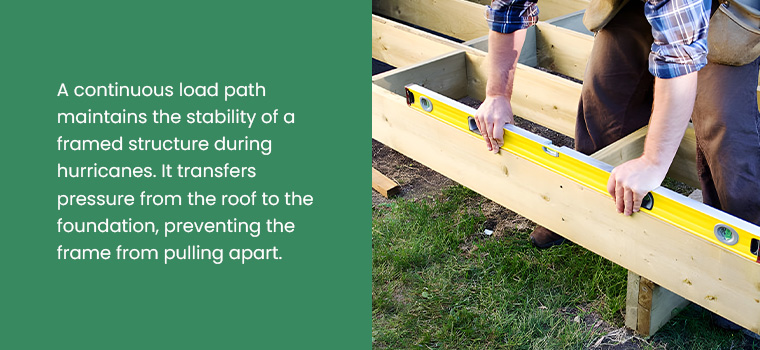
A continuous load path maintains the stability of a framed structure during hurricanes. It transfers pressure from the roof to the foundation, preventing the frame from pulling apart.
Here's what that can look like:
- Roof trusses push force into the top plate.
- Top plates move the force into the wall studs.
- Studs push into sill plates.
- The chain stops the roof from lifting.
- Fasteners make the path complete.
- Ring shank nails secure roof sheathing.
- Screws tighten floor systems.
- Metal ties bond every joint.
Code Compliance in High-Velocity Hurricane Zones
In response to Hurricane Andrew and Hurricane Charley, the Florida Building Code increased its uplift and moisture standards in HVHZ counties. This means that roof sheathing must show rated uplift values, and inspectors will need to verify nail length, spacing and edge fastening before you install shingles. If using a truss package, it will need sealed engineering drawings that list the connector type and fastener count for every seat.
Additionally, pressure-treated lumber used in hurricane-resistant construction must meet the American Wood Protection Association UC4B retention levels for exterior or ground contact standards. Anchor bolts must be embedded to the depth shown on the plans. Maintaining these code provisions ensures the roof remains securely tied to the walls and foundation, significantly reducing the risk of damage.
Real-World Examples
After Hurricane Ian, engineers conducted surveys of coastal neighborhoods. Homes built with hurricane-proof wood in Florida kept their roofs, walls and windows intact. Trusses stayed seated on top plates, sheathing held tight to rafters and continuous load pathways prevented framed walls from racking during sudden pressure changes.
During Hurricane Charley, many older wood homes lost their roof decking because the fasteners pulled loose, but houses that used modern connectors and treated framing stood firm. These real-world results pushed more contractors to start using hurricane-resistant wood in their construction.
Benefits for Builders and Homeowners
Framing choices affect how quickly a structure comes together, how much it costs to finish and how well it handles hurricane winds. Some benefits include:
- Cost-effective: Installs faster than concrete, lowers labor bills, requires no heavy demolition for remodeling and has a lower overall cost
- Sustainable: Strong framing and natural insulation that reduce energy use in hot or cold weather
- Faster build times: Lumber is pre-cut, easy to carry and simple to install, saving time
Get Fast Lumber Delivery From Florida Lumber
Safe homes start with strong framing, and hurricane-ready framing depends on materials that meet HVHZ and Miami-Dade code specifications. At Florida Lumber, we stock high-quality lumber, including pressure-treated boards, FRTW roof sheathing and engineered beams that meet the strict coastal requirements for hurricane-proof construction. Our inventory includes the hardware you need for hurricane-proof construction, such as truss connectors, hold-downs and ring shank nails.
We help your construction schedule stay on track with our fast lumber delivery in Miami and rapid service across Cape Coral and Southwest Florida. Your loads arrive in full units or job-sized quantities, so you can order what you need without waiting for back orders, whether you're a framing crew or a DIY customer. Our staff will help you match lumber grade, thickness and treatment level to inspection requirements, which keeps your projects moving and reduces the chance of delays.
Request a quote on HVHZ-approved framing today and get fast delivery before the next hurricane warning.