How to Choose the Right Lumber for Your South Florida Construction Project
To All Our Valued Customers, Over the past few years, the Covid 19 Pandemic has forced us to adapt and change the way we do things on a day-to-day basis. Florida Lumber is no exception. To make sure that we remain strong and competitive in the market for the years to come, Florida Lumber has had to adjust and change our vision for the future. In the last 2 years, we have stopped selling Sheetrock and drywall products, roofing felt and roofing materials, and have even closed on Saturdays.
Over the last few months, we have been transitioning our way out of the door supply business so on August 31, 2022, our door shop will stop assembling doors. We will continue liquidating our doors from inventory until we are out of material.
Some customers have asked if we are closing or even moving locations. To set the story straight, we are not closing or selling the business and we are not moving. These changes are all part of our new vision and path to continue serving South Florida and increasing our footprint in the construction supply industry.
Our focus is going to be on Lumber, Construction Materials, Rebar Fabrication and Rebar Accessories. As we have liquidated some of the items that we don’t sell anymore we have created more space to buy a larger volume of our core items and pass on the savings to our customers.
In the next year you will start seeing changes that will help improve our ability to serve you, our customers. We appreciate your business and your patience as Florida Lumber’s new vision becomes reality.
A Todos Nuestros Valiosos Clientes En los ultimos anos, la pandemia de el Virus (Covid 19) nos ha forzado a adaptarnos y cambiar la forma de hacer cosas en el dia a dia. Florida Lumber no ha sido una excepcion.
Para asegurarnos de mantenernos fuertes y competitivos en el mercado en los anos venideros, Florida Lumber ha tenido que ajustar y cambiar nuestra vision para el futuro. En los dos ultimos anos hemos dejado de vender los productos de yeso (sheetrock), paneles de yeso (drywall), tela asfaltica (roofing felt), materiales de techo y cerramos los Sabados. En los ultimos meses, hemos estado en transicion para salir del negocio de suministro de puertas, en Agosto 31, del 2022 nuestra tienda de puertas dejara de construir y/o cortar puertas. Vamos a continuar liquidando nuestro inventario de puertas haste que terminemos todo el material. Algunos de nuestros clientes han preguntado si estamos cerrando o si nos estamos moviendo a otra localidad. La verdad es que no estamos cerrando, no estamos vendiendo y no estamos cambiando de localidad. Estos cambios son todos parte de nuestra nueva vision y camino a continuar sirviendo al estado sur de la Florida y incrementar nuestras huellas en la industria de suministros de construccion.
paneles de yeso (drywall), tela asfaltica (roofing felt), materiales de techo y cerramos los Sabados.
En los ultimos meses, hemos estado en transicion para salir del negocio de suministro de puertas, en Agosto 31, del 2022 nuestra tienda de puertas dejara de construir y/o cortar puertas.
Vamos a continuar liquidando nuestro inventario de puertas haste que terminemos todo el material. Algunos de nuestros clientes han preguntado si estamos cerrando o si nos estamos moviendo a otra localidad.
La verdad es que no estamos cerrando, no estamos vendiendo y no estamos cambiando de localidad. Estos cambios son todos parte de nuestra nueva vision y camino a continuar sirviendo al estado sur de la Florida y incrementar nuestras huellas en la industria de suministros de construcción.
2431 N.W. 20TH ST.
MIAMI, FL 33142
PHONE: (305) 635-6412
Sales Fax: (305) 633-4054
Accounting Fax: (305) 635-3723
Email: [email protected]
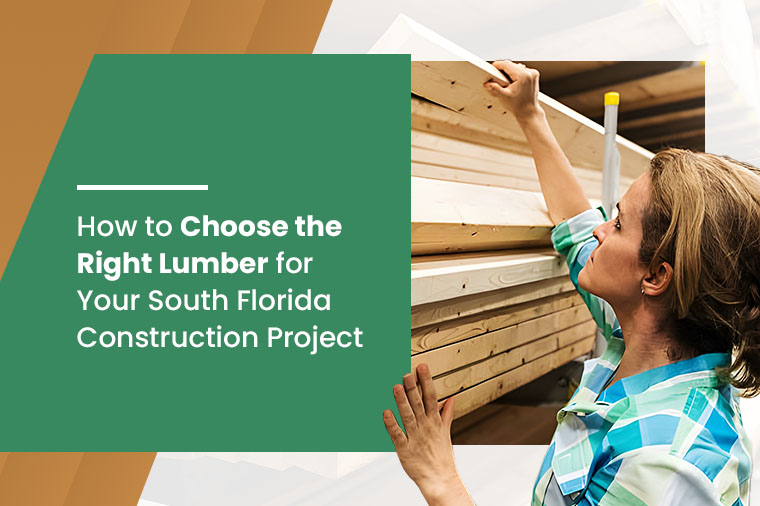
How to Choose the Right Lumber for Your South Florida Construction Project
Building in South Florida means tackling the wild elements. From relentless sun and high humidity levels to driving rain and natural pests, Florida faces a unique blend of natural challenges.
Every local builder knows these complexities can wreak havoc on construction projects, which is why choosing the right lumber is crucial for project success. Investing in the best lumber for Florida construction can save time and money, prevent future headaches and protect your reputation as a reliable builder.
Treatment vs. Natural Resistance: What's Best for Florida?
When selecting lumber, South Florida builders must consider much more than looks or price. The region’s subtropical climate calls for materials that can resist moisture, insects and decay. Your main choices boil down to two categories — pressure-treated lumber and naturally resistant woods.
Pressure-Treated (PT) Florida Construction Lumber
The key to lumber longevity is proper treatments. PT lumber leverages preservatives to ward off rot, fungus and termites. Florida’s humidity can cause ordinary PT lumber to warp or shrink as it dries out. Kiln-Dried After Treatment (KDAT) lumber offers far more stability than ordinary PT lumber. Additionally, outdoor projects or applications where wood touches the ground can greatly benefit from ground contact treatments, which have a higher level of preservative retention than aboveground grades.
Southern Yellow Pine is the workhorse of PT lumber in Florida. This species is strong and cost-effective, making it a go-to for framing, decking and structural elements that face harsh weather. Southern Yellow Pine also provides an excellent surface for preservatives to penetrate, resulting in more effective long-term protection against decay and insects. This species is grown and milled throughout the Southeast, making it widely available and cost-effective for various applications.
Naturally Resistant Woods for Florida Projects
Naturally resistant woods are free of chemicals and offer a natural, long-lasting beauty. However, this lumber is often more expensive and may be less available compared to PT Southern Yellow Pine. For projects where aesthetics and chemical-free performance are priorities, there are three top performers to consider:
- Cypress: Native to the Southeast, cypress is rich in natural oils that help it fight off moisture and insects. Its weathered gray look is popular for exterior siding, soffits and custom carpentry.
- Cedar: Another reputable option, cedar’s aromatic compounds act as a deterrent to bugs and decay, and its light weight makes it easy to work with.
- Redwood: While rare and more often found on the West Coast, redwood is known for its beauty and natural resistance, but comes with a premium price tag.
Engineered and Tropical Hardwoods for Superior Durability
In coastal Florida, construction projects require materials that deliver exceptional strength and resilience from the inside out. When basic lumber isn’t enough, builders turn to advanced wood options carefully formulated or naturally equipped to outperform the elements.
Whether you’re crafting load-bearing supports or adding a luxury touch to outdoor spaces, engineered lumber and tropical hardwoods provide unmatched reliability and style, ensuring your work stands tall despite the region's relentless heat, moisture and storms:
- Engineered wood: Some building elements demand more dimensional stability, such as structural beams and headers. Engineered lumber offers a solution for these applications. Options like Laminated Veneer Lumber (LVL) will not twist or bow in South Florida's humidity, and structural plywood will be less likely to delaminate compared to non-structural grades.
- Tropical hardwoods: High-end decks, docks and waterfront projects often utilize tropical hardwoods like Ipe and Teak. Ipe generally offers more than 25 years of life, while Teak is exceptional at withstanding saltwater and harsh sun conditions.
Technical Specifications and Florida Building Code Compliance
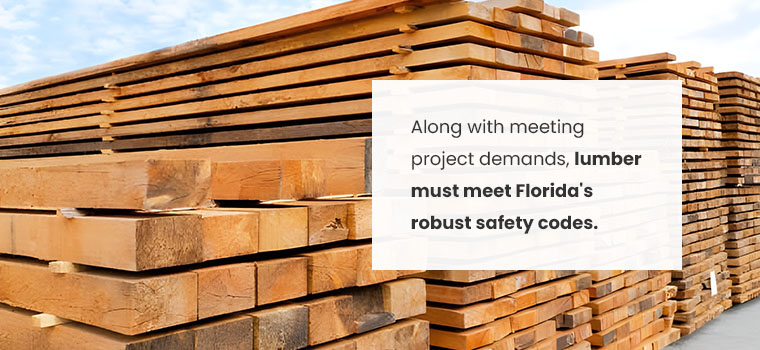
Along with meeting project demands, lumber must meet Florida's robust safety codes. Critical information to note includes:
- Wood preservatives: Alkaline Copper Quaternary (ACQ) and Copper Azole (CA) are common, safe treatments for modern PT lumber. These preservatives offer excellent resistance to fungi and insects. Avoid using Chromated Copper Arsenate (CCA) for residential applications, and assess requirements before using this treatment for commercial or agricultural projects.
- Lumber grade selection: Lumber grades reflect the structural integrity of a material. Top-tier lumber features minimal defects and is ideal for major load-bearing uses. Hardwood grades are broken into three categories — First and Seconds (FAS), FAS-One-Face (Fas/1F) and Selects (SEL) for the highest lumber grades, and Number 1 Common and Number 2 Common for lower grades.
- Build code compliance: Meeting Florida Building Code (FBC) and High-Velocity Hurricane Zone (HVHZ) standards is critical. HVHZ provisions require lumber to meet strict guidelines for uplift resistance. Few lumber products possess the necessary performance ratings for structural framing, so assess product specifications and coastal zone requirements before purchasing.
Best Practices for Storage, Installation and Maintenance
Even the best wood can fail due to improper handling or installation. Protect your investment with these best practices for lumber storage, installation and maintenance:
- Keep lumber off the ground using spacers or pallets.
- Store lumber under a waterproof cover to prevent trapping humidity.
- Seal all fresh cuts with a water-repellent sealer to block moisture ingress.
- Use corrosion-resistant fasteners to prevent rust markers and structural weakness, especially with treated wood.
- Pre-drill hardwoods and exotic species to avoid splitting.
- Ensure proper spacing for ventilation and drainage for decks and exteriors.
- Allow wood to fully dry before finishing.
- Apply high-quality sealant or stain to block UV and moisture.
- Conduct regular inspections and create a resealing schedule.
How Florida Lumber Helps You Build With Confidence
At Florida Lumber, we understand that local builders need fast, reliable access to the best building materials for South Florida's unique environment. Our lumber inventory includes everything from KDAT Southern Yellow Pine to engineered lumber and tropical hardwoods. Our knowledgeable staff are experts in local codes, so we can guide your selections to ensure compliance and help you achieve long-term success.
We also provide fast, reliable delivery across Southwest Florida so you can obtain the materials you need, regardless of your building location. As a partner for local builders, we aim to keep your project moving, on schedule and within budget.
Find the Best Lumber for Florida Weather and Project Success
Choosing the right lumber is a critical decision that requires careful consideration of your project's exposure, design and budget. Florida Lumber is your reliable lumber supplier in Miami, Fort Myers, Naples, Bonita Springs and Broward. We're a family-owned and operated full-service lumber yard. With our local delivery options, extensive inventory availability and nearly six decades of experience, we're the trusted partner you need to ensure project success.
Contact our team to request a quote or speak with one of our lumber experts for project recommendations.