
Common Mistakes When Buying Bulk Construction Materials

To All Our Valued Customers, Over the past few years, the Covid 19 Pandemic has forced us to adapt and change the way we do things on a day-to-day basis. Florida Lumber is no exception. To make sure that we remain strong and competitive in the market for the years to come, Florida Lumber has had to adjust and change our vision for the future. In the last 2 years, we have stopped selling Sheetrock and drywall products, roofing felt and roofing materials, and have even closed on Saturdays.
Over the last few months, we have been transitioning our way out of the door supply business so on August 31, 2022, our door shop will stop assembling doors. We will continue liquidating our doors from inventory until we are out of material.
Some customers have asked if we are closing or even moving locations. To set the story straight, we are not closing or selling the business and we are not moving. These changes are all part of our new vision and path to continue serving South Florida and increasing our footprint in the construction supply industry.
Our focus is going to be on Lumber, Construction Materials, Rebar Fabrication and Rebar Accessories. As we have liquidated some of the items that we don’t sell anymore we have created more space to buy a larger volume of our core items and pass on the savings to our customers.
In the next year you will start seeing changes that will help improve our ability to serve you, our customers. We appreciate your business and your patience as Florida Lumber’s new vision becomes reality.
A Todos Nuestros Valiosos Clientes En los ultimos anos, la pandemia de el Virus (Covid 19) nos ha forzado a adaptarnos y cambiar la forma de hacer cosas en el dia a dia. Florida Lumber no ha sido una excepcion.
Para asegurarnos de mantenernos fuertes y competitivos en el mercado en los anos venideros, Florida Lumber ha tenido que ajustar y cambiar nuestra vision para el futuro. En los dos ultimos anos hemos dejado de vender los productos de yeso (sheetrock), paneles de yeso (drywall), tela asfaltica (roofing felt), materiales de techo y cerramos los Sabados. En los ultimos meses, hemos estado en transicion para salir del negocio de suministro de puertas, en Agosto 31, del 2022 nuestra tienda de puertas dejara de construir y/o cortar puertas. Vamos a continuar liquidando nuestro inventario de puertas haste que terminemos todo el material. Algunos de nuestros clientes han preguntado si estamos cerrando o si nos estamos moviendo a otra localidad. La verdad es que no estamos cerrando, no estamos vendiendo y no estamos cambiando de localidad. Estos cambios son todos parte de nuestra nueva vision y camino a continuar sirviendo al estado sur de la Florida y incrementar nuestras huellas en la industria de suministros de construccion.
paneles de yeso (drywall), tela asfaltica (roofing felt), materiales de techo y cerramos los Sabados.
En los ultimos meses, hemos estado en transicion para salir del negocio de suministro de puertas, en Agosto 31, del 2022 nuestra tienda de puertas dejara de construir y/o cortar puertas.
Vamos a continuar liquidando nuestro inventario de puertas haste que terminemos todo el material. Algunos de nuestros clientes han preguntado si estamos cerrando o si nos estamos moviendo a otra localidad.
La verdad es que no estamos cerrando, no estamos vendiendo y no estamos cambiando de localidad. Estos cambios son todos parte de nuestra nueva vision y camino a continuar sirviendo al estado sur de la Florida y incrementar nuestras huellas en la industria de suministros de construcción.
2431 N.W. 20TH ST.
MIAMI, FL 33142
PHONE: (305) 635-6412
Sales Fax: (305) 633-4054
Accounting Fax: (305) 635-3723
Email: [email protected]
Common Mistakes When Buying Bulk Construction Materials
A single bulk material order can make or break your construction timeline. Order too little, and you're facing project delays. Order too much, and you're stuck with waste, disposal costs and budget overruns. For contractors managing tight margins and homeowners overseeing major renovations, these mistakes are expensive.
Your procurement strategy often defines how smoothly your construction runs. Whether you're ordering lumber in bulk or coordinating deliveries for a multi-phase build, getting your order right from the start protects your project's timeline, budget and quality. This guide walks you through the five most common bulk purchasing mistakes and shows you how to avoid them.
1. Inaccurate Quantity Calculations and Material Waste
Bulk material ordering mistakes typically start with a simple miscalculation. Under-ordering means you'll face schedule setbacks while waiting for additional materials while paying extra delivery fees for rush orders. Overstocking building materials can tie up your budget and create disposal costs.
For contractors, material waste is capital that could've been used to fund other ventures. For homeowners, it means watching a significant chunk of renovation funds end up in a dumpster.
Material waste prevention also protects the environment. Construction and demolition activities generate significant debris, making waste reduction a priority for addressing solid waste issues at the source. The Environmental Protection Agency emphasizes source reduction as the most effective approach to diverting construction supplies from landfills.
Accurate quantity calculations require detailed project plans, precise measurements and accounting for waste factors specific to each material type.
2. Incorrect Specifications and Poor-Quality Materials
Using materials that don't match your project requirements can lead to structural failures, require project redos and void manufacturer warranties. These bulk purchasing mistakes contractors make often stem from prioritizing initial cost over long-term performance.
When you're comparing quotes from different suppliers, ask whether products comply with relevant industry standards for your application. Cutting corners on material quality to save a few dollars can affect your entire project.
3. Poor Logistics
Poor planning creates chaos on jobsites. When you don't coordinate logistics properly, you face cost overruns, material damage and workflow disruptions that ripple through your entire schedule.
Factoring in Site Access and Storage
Delivery trucks need clear access routes and adequate space to maneuver. Before your order arrives:
-
Confirm your site can accommodate the delivery vehicle and verify access routes can handle the weight.
-
Designate a protected storage area that keeps materials safe from weather damage.
-
Have the right equipment ready on-site for unloading.
Storage planning prevents costly material damage. Lumber stored directly on the ground absorbs moisture, causing warping. Metal components left exposed to weather can corrode. Store equipment, supplies and materials in a covered space until you need to use them.
Coordinating Delivery Deadlines
A missed or delayed delivery creates a domino effect across your construction site. Crews sitting idle waiting for materials costs money, and rescheduling subsequent trades becomes a logistical nightmare.
Coordinate deliveries to match your construction phases. Materials arriving too early take up valuable storage space or get damaged from extended exposure. But if materials arrive too late, they can halt progress and force schedule adjustments. Work with your supplier to map delivery timing to your milestones, building in appropriate buffer time for weather or unexpected delays.
4. Focusing Only on Price Instead of Value
The cheapest quote often leads to the most expensive project. Common construction procurement errors frequently stem from focusing solely on initial material costs while ignoring the total cost of ownership (TCO). A slightly higher-quality material from a reliable supplier typically costs less in the long run by preventing failures, reducing waste and eliminating project delays.
TCO includes the purchase price plus delivery fees, potential waste from defects, labor costs for handling quality issues, and the expense of premature replacement. A lower-grade material that fails prematurely can cost far more than the price difference you saved up front. Factor in reliability, supplier support and material longevity when comparing options.
Smart cost management means finding value, not just low prices. Reduce costs in lumber buying through strategies like bulk discounts, optimized ordering schedules and building relationships with suppliers who offer competitive pricing on quality components. These approaches cut expenses without sacrificing performance.
5. Lack of Supplier Vetting and Coordination
Your supplier relationship forms the foundation of successful bulk material procurement. A good supplier provides materials, as well as expertise, logistical support, quality assurance and problem-solving partnership when issues arise. Supply chain mistakes in construction often trace back to working with unknown or unvetted suppliers who can't deliver on their promises.
An unreliable supplier leaves you waiting for delayed shipments, dealing with incorrect orders and scrambling to find alternatives mid-project. These disruptions severely delay construction timelines and force you into costly last-minute decisions. Vetting potential suppliers before you place large orders protects the build.
Look for suppliers with established track records, knowledgeable staff who understand your material needs and systems for tracking orders and coordinating deliveries. Choosing a quality lumber supplier requires evaluating their inventory depth, delivery capabilities and customer service responsiveness.
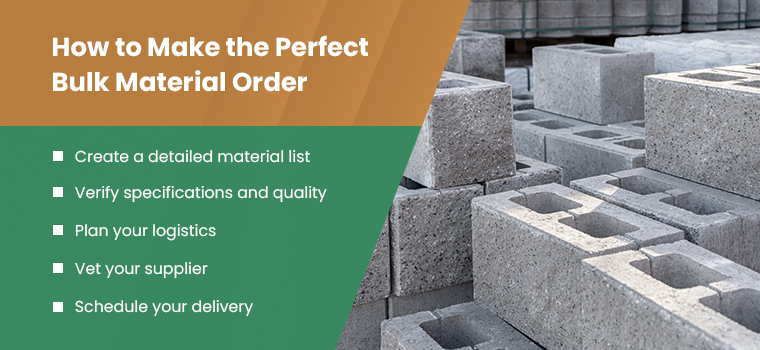
How to Make the Perfect Bulk Material Order
Follow this checklist when you place a bulk material order to avoid costly mistakes and keep your construction projects on track:
-
Create a detailed material list: Calculate exact quantities based on precise project measurements, including appropriate waste factors for each material type.
-
Verify specifications and quality: Confirm all materials meet industry standards and match your project requirements for grade, type and performance.
-
Plan your logistics: Assess site access for delivery vehicles, designate protected storage areas and prepare unloading equipment for deliveries.
-
Vet your supplier: Choose vendors with proven track records, knowledgeable staff and reliable delivery systems who can support your timeline.
-
Schedule your delivery: Coordinate material arrival timing with your construction phases to prevent storage issues and keep crews productive.
Get Your Bulk Order Right With Florida Lumber
Florida Lumber has been helping contractors and homeowners across South Florida get bulk material orders right since 1966. From Miami to Naples, Bonita Springs and Fort Myers, our staff brings decades of experience to every order, guiding you through quantity calculations, material specifications and delivery logistics.
We offer free delivery to Miami-Dade and Broward Counties on qualifying orders, bringing high-grade materials, including lumber and building materials, directly to your jobsite. Ready to place a bulk order with confidence? Call us at 305-615-4218 or contact our team online for expert guidance on your next project.